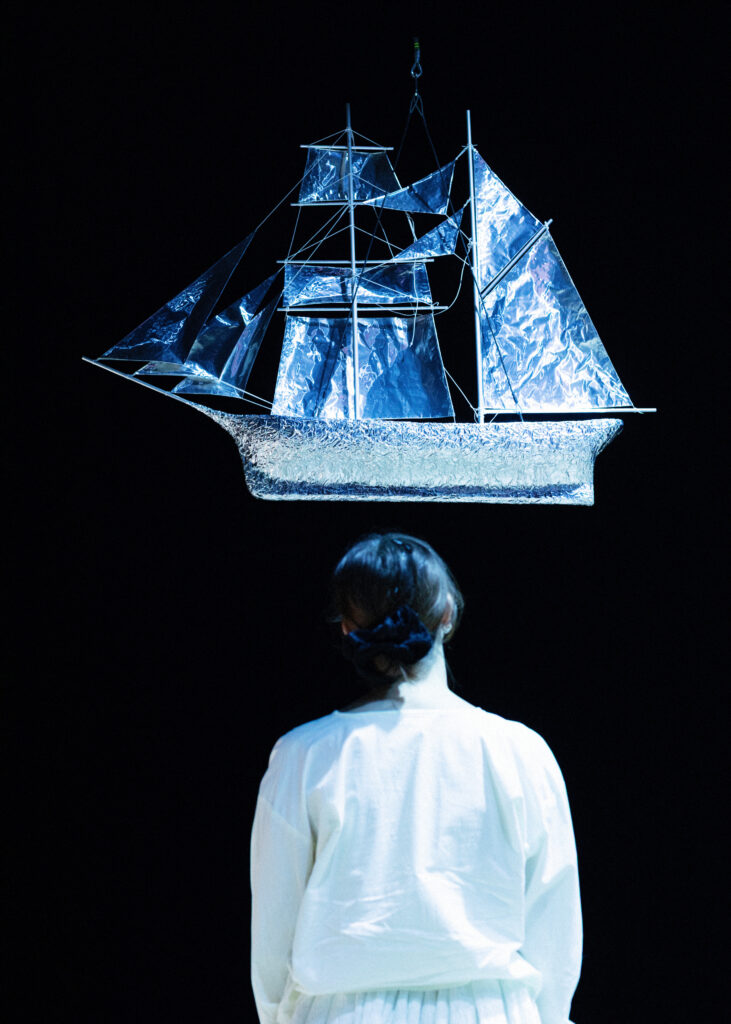
Works and Days is an attempt to stitch together all the loose pieces that make up our memory. With humor and seriousness, Gunilla Heilborn tries to find out how all the loose episodes she has collected are connected and whether it is really possible to understand the world better by reading both the Iliad and the Odyssey.
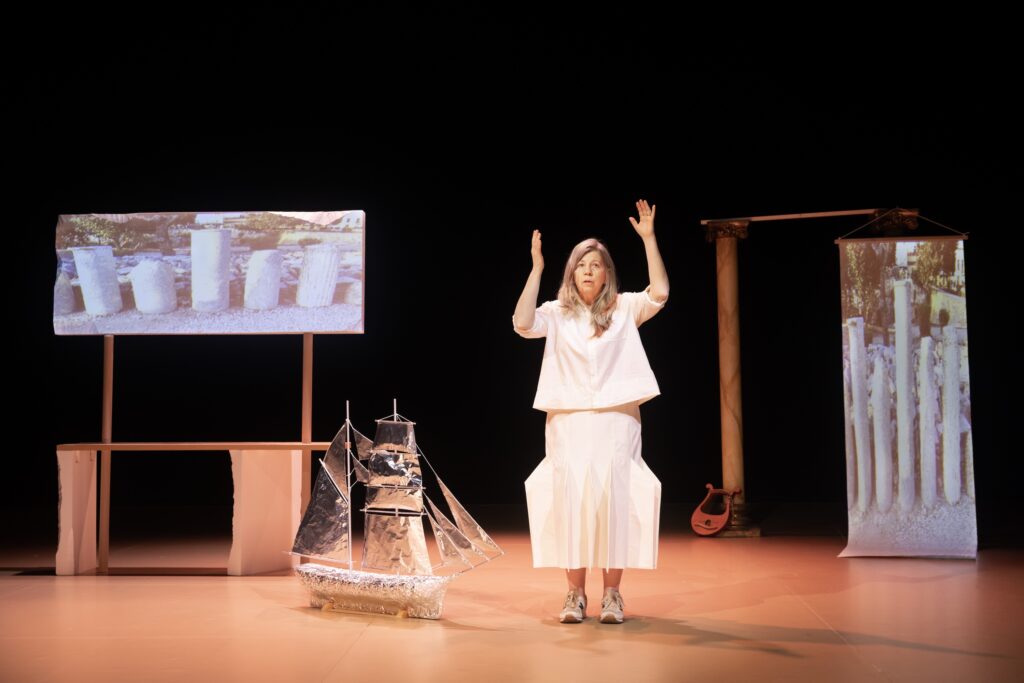
Works and Days consists of two parts. In the first, Heilborn herself navigates through previous works in her search for a beginning. Drawing on the stories of ancient poets, a recent trip to Greece and her previous production This is not a love story from 2011, she tries to see if it is possible to link one event to another or if it is perhaps the lack of logic that characterises everything we do.
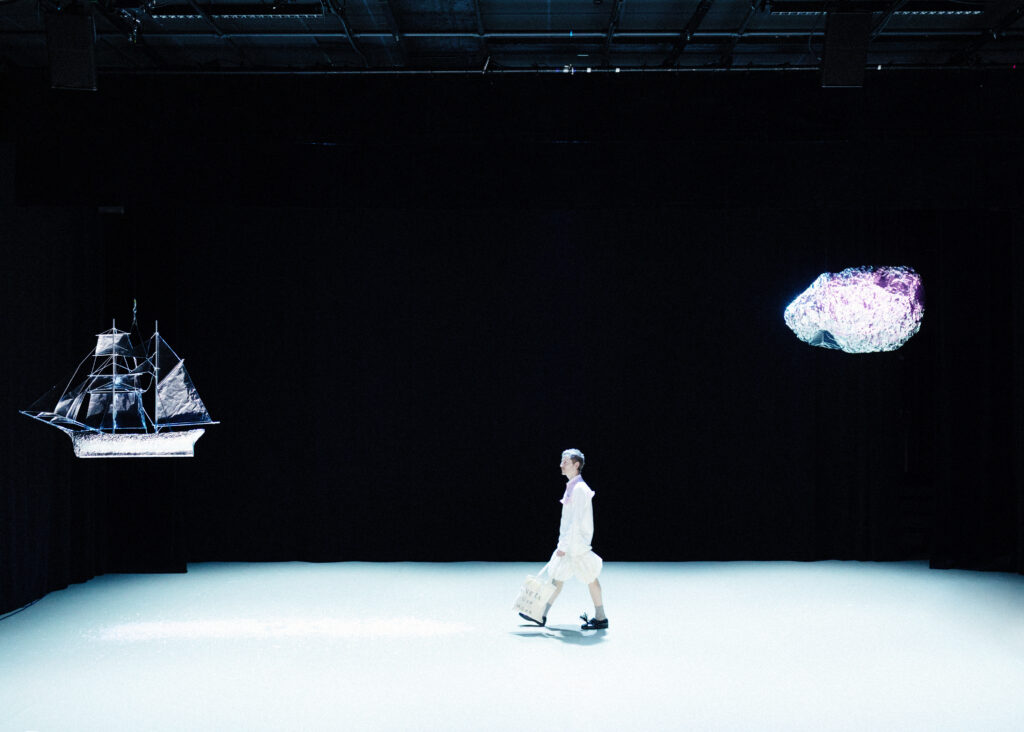
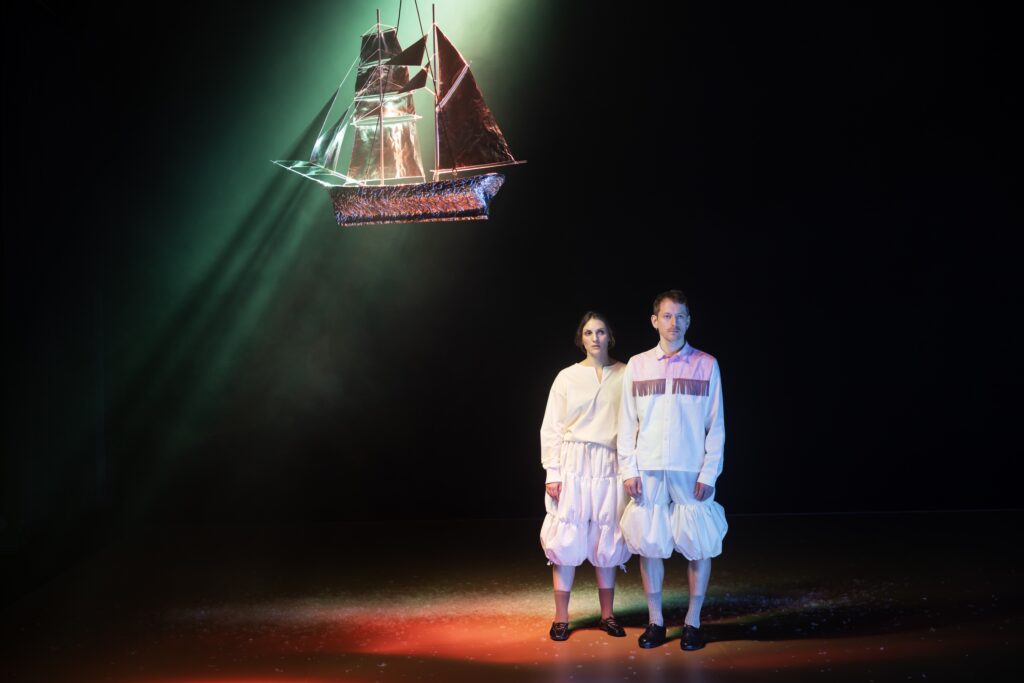
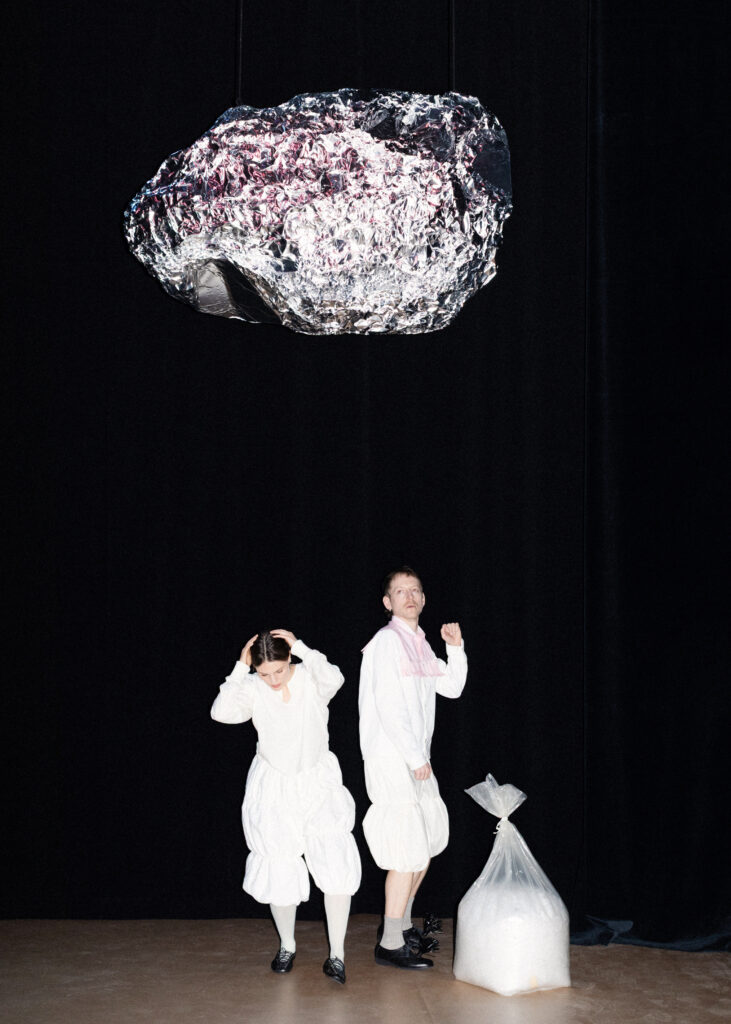
In the second part, two dancers -let’s call them Swift-footed Sophie and Easy-going Ludvig- move through fog, mist and music. With fleeting ease, they stroll across the stage and ask themselves and the audience questions. Do you get seasick easily? Would you describe me as a typical Renaissance person? That I have many strings on my lyre?
The essence of the work is its chaotic structure, but a number of things recur in the two parts; the travel and what we remember of what we have experienced. As well as the question of whether it is possible to know what to do on which days and why.
The room, the light and the music play a large role in the performance and are made by Heilborn’s long-time collaborators Katarina Wiklund, Minna Tiikkainen, Mårten Nilsson and Kim Hiorthøy.
” It’s only those who love to learn new things who escapes being reborn as a donkey or an ant” – Socrates
Press quotes
The strength of the first part is the genius and charm of Heilborn in his own person, the comic interplay of Daae and Augot in the second part and the congenial presentation of the material. And an unusually large amount of dancing! The movements are thoughtful, lingering, “Works and Days” is a passionate aimless defence of the aimless. In an era of indisputable performance demands and results-oriented measurability, Heilborn's incoherent sprawl is refreshing. Heilborn asks herself why certain things remain in the memory, while others are forgotten. It is a recurring question in her artistry, which is also highly relevant in the ongoing social shift, now that we are letting technology replace several of the brain's functions — not least taking care of our travel memories. However, Heilborn's philosophical-humorous, thought-provoking performing arts deserve a place in our memories for several reasons. She is absolutely phenomenal at tying together her works and days with interesting philosophical reflections in intricately knotted threads. What belongs at the beginning and at the end, however, is up to us to answer.